

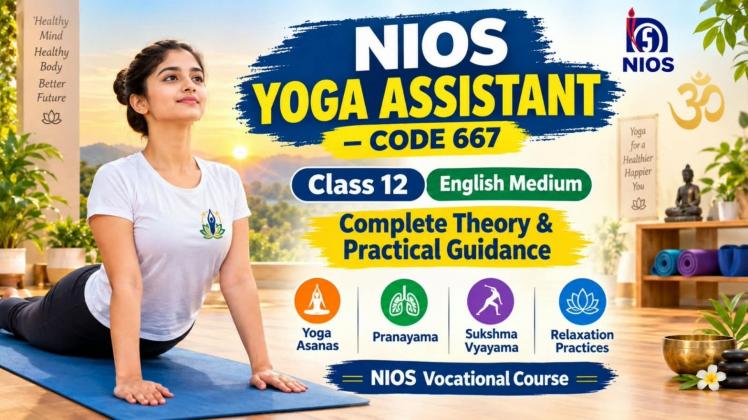
NIOS YOGA ASSISTANT CODE 667 PRACTICAL FILE
NIOS Yoga Assistant – Code 667: Description
NIOS Yoga Assistant (Code 667) is a vocational subject offered by the National Institute of Open Schooling (NIOS). This course is designed to provide learners with basic knowledge and practical skills related to Yoga, Yogic practices, health, fitness, wellness, and assisting in yoga sessions. It helps students understand the importance of yoga in maintaining physical, mental, emotional, and social well-being.
Yoga is an ancient discipline that originated in India and has become popular throughout the world because of its holistic approach to health. It combines physical postures, breathing practices, relaxation, concentration, and meditation. The Yoga Assistant course introduces learners to these fundamental aspects and prepares them to assist a yoga instructor or teacher in conducting yoga-related activities in a safe and systematic manner.
Introduction to Yoga
The word Yoga is derived from the Sanskrit root Yuj, which means to join, unite, or connect. Yoga aims to create harmony between the body, mind, and inner self. Regular practice of yoga can help improve flexibility, strength, balance, concentration, relaxation, and overall awareness.
Yoga is not limited to physical exercise. It includes various practices such as Asana, Pranayama, relaxation, meditation, and yogic discipline. A Yoga Assistant should understand these practices and know how to support participants during a yoga session.
Objectives of Yoga Assistant Course
The main objective of the NIOS Yoga Assistant course is to develop basic knowledge and practical competence in yoga. Students learn how to:
- Understand the meaning, history, and importance of yoga.
- Identify basic yogic practices and their purpose.
- Perform selected yoga postures correctly.
- Understand basic breathing and relaxation practices.
- Assist a yoga teacher during yoga sessions.
- Maintain proper discipline and cleanliness in the yoga classroom.
- Follow basic safety precautions while performing yoga.
- Encourage participants to practice yoga regularly.
- Understand the importance of healthy lifestyle and wellness.
- Develop communication and observation skills required for assisting learners.
Importance of Yoga
Yoga can play an important role in maintaining a healthy lifestyle. Regular physical activity and appropriate yogic practices may help improve flexibility, muscular endurance, body awareness, posture, and relaxation. Breathing and concentration practices can also help individuals develop greater awareness of their breathing and mental state.
Yoga can be practiced by people of different age groups, but the practices should be selected according to the individual's age, physical condition, ability, and experience. A Yoga Assistant should therefore understand that every participant may have different requirements.
Basic Yogic Practices
The Yoga Assistant curriculum introduces learners to different types of yogic practices. These may include Sukshma Vyayama, Asana, Pranayama, relaxation techniques, and meditation-related practices.
Sukshma Vyayama, or subtle exercises, are generally performed as preparatory movements. They involve gentle movements of different parts of the body and can help prepare the body for further yogic practices.
Asanas are yogic postures performed with awareness and proper body alignment. Different categories of asanas include standing, sitting, forward-bending, backward-bending, twisting, balancing, and relaxation postures.
Pranayama refers to systematic practices involving awareness and regulation of breathing. Proper breathing is an important component of many yoga sessions.
Relaxation practices help the practitioner calm the body and mind after physical activity. Meditation and concentration practices can help develop attention and inner awareness.
Role of a Yoga Assistant
A Yoga Assistant works under the guidance of a qualified yoga teacher or instructor. The assistant's role is to support the smooth and safe conduct of yoga sessions.
Before the session, the assistant can help prepare the yoga room, arrange mats and other necessary materials, maintain cleanliness, and ensure that the practice area is safe and comfortable.
During the session, the assistant may help participants understand basic instructions, observe whether they are following the teacher's directions, maintain discipline, and provide general assistance when required.
After the session, the assistant can help organize the practice area, maintain equipment, and support the teacher in completing routine activities.
A Yoga Assistant should not independently diagnose medical conditions or provide medical treatment. When a participant has a health concern, injury, pain, or other special requirement, the matter should be referred to the appropriate qualified professional or instructor.
Preparation of the Yoga Classroom
A suitable yoga classroom should be clean, quiet, well-ventilated, and free from unnecessary obstacles. The floor should provide sufficient space for participants to perform movements safely. Yoga mats should be arranged with adequate distance between participants.
The room should have sufficient lighting and fresh air. Any objects that could cause injury should be removed from the practice area. The Yoga Assistant should check the classroom before every session.
Preparation of the Practitioner
Participants should wear comfortable, loose, and light clothing that allows free movement. Yoga is generally practiced on a suitable mat or clean surface. Participants should follow the instructor's instructions and avoid forcing the body into difficult positions.
Yoga practices should be performed with awareness and controlled movements. Beginners should learn gradually rather than attempting advanced postures without proper guidance.
Safety and Precautions
Safety is an important responsibility during yoga practice. The Yoga Assistant should remain attentive to participants and the practice environment.
Important precautions include:
- Perform yoga under appropriate guidance.
- Avoid sudden or forceful movements.
- Maintain proper body alignment.
- Do not compete with other participants.
- Stop or modify a practice if pain or unusual discomfort occurs.
- Follow the instructor's instructions carefully.
- Use appropriate space and equipment.
- Consider individual age, ability, and physical condition.
- Special populations should practice appropriate modifications under qualified guidance.
- Medical conditions should be discussed with an appropriate healthcare professional.
Practical Learning
The practical component of Yoga Assistant helps students develop confidence through actual performance and demonstration. Students may be required to learn and demonstrate different yogic practices according to the prescribed curriculum.
Practical work can include preparation of the yoga classroom, preparation of the practitioner, demonstration of basic exercises and asanas, breathing practices, relaxation techniques, and maintaining a systematic yoga-session format.
Maintaining a Yoga Practical File is also useful for recording aims, introductions, materials required, preparation, methods, precautions, benefits, and observations related to different practices.
Benefits of Learning Yoga Assistant
The course can help learners develop practical knowledge that may be useful in educational institutions, wellness centres, community programmes, fitness environments, and yoga-related activities, subject to the applicable requirements and qualifications of the organization.
Apart from occupational skills, yoga education can encourage learners to develop healthy habits, discipline, concentration, self-awareness, and an understanding of the importance of physical activity and relaxation.
Conclusion
NIOS Yoga Assistant (Code 667) provides learners with an introduction to yoga and the skills required to assist in organized yoga sessions. The course combines theoretical understanding with practical learning and emphasizes proper preparation, safe practice, discipline, communication, and awareness.
A Yoga Assistant has an important supporting role in creating a positive and organized environment for yoga practice. By learning basic yogic practices, classroom preparation, safety measures, and assistance techniques, students can develop useful knowledge and practical skills related to yoga and wellness. Regular and appropriate yoga practice can become a valuable part of a balanced and healthy lifestyle.